GE Landing page Quiz

Using Body Composition data from DXA1 to help optimize Athletes performances2

Get ready to challenge yourself with questions about sport and
the technology that could help drive champions to the top!

Question 1/5

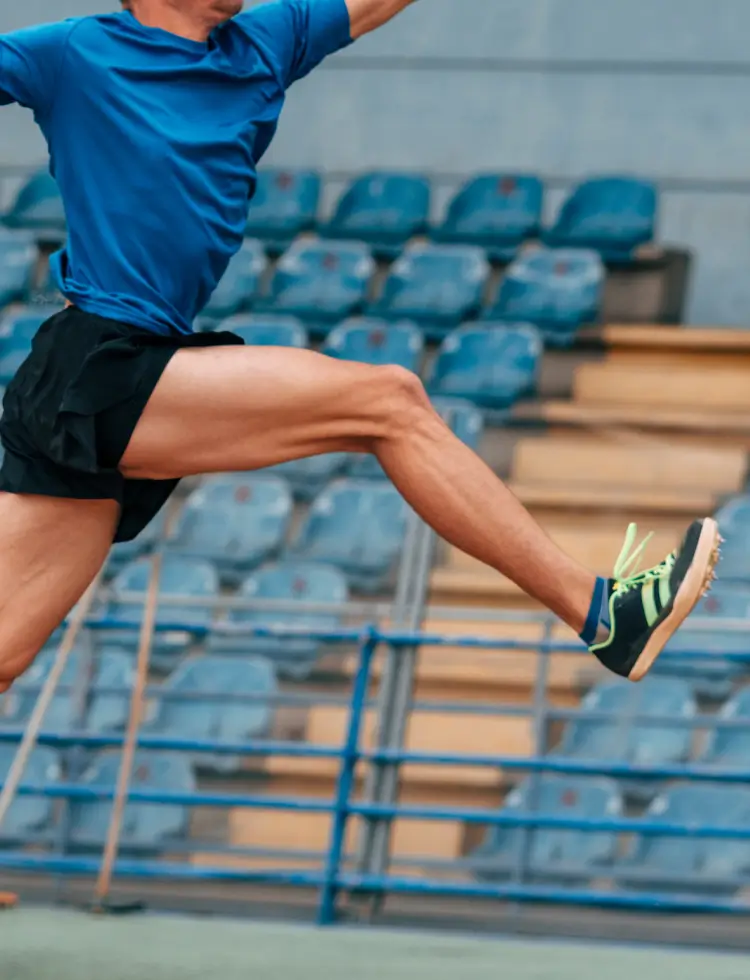
The average male has between 18-24% body fat. How much body fat does the average male competing in the Long Jump event have:

Select one answer

Source
https://www.ncaa.org/sports/2015/5/21/body-composition-what-are-athletes-made-of.aspx

Did you know ?

It is common for student-athletes to seek out a body composition goal or to ask “is my body fat too high?”
or “what’s right for my sport?” It is impossible to make a one-size-fits-all recommendation. Determining an individual target range may incorporate questions such as when she or he felt best? Performed best?
What would reflect a realistic rate of change? What would allow the athlete to make important lifestyle changes that are realistic for her/him?

https://www.ncaa.org/sports/2015/5/21/body-composition-what-are-athletes-made-of.aspx
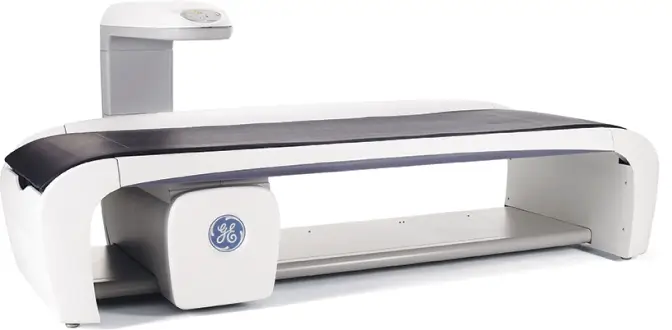
Championing the demands of each sport requires a tool as diverse as the athletes themselves. The use of data obtained from body composition scans on Lunar DXA systems may be a game-changer in monitoring body composition.
Question 2/5

The precision of skinfold calliper tests
used to assess total body fat in elite sport
is 3-5%. What is the precision of
GE HealthCare’s Lunar iDXA?

Select one answer

Source
Skinfold Precision: https://stillmed.olympics.com/media/Documents/Athletes/Medical-Scientific/Consensus-Statements/2012_current-status-body-composition-assessment-sport.pdf
IDXA Precision: https://pubmed.ncbi.nlm.nih.gov/22542222/

Did you know ?

It’s also no secret that among and even within sports, there is no one-size-fits-all method on how to eat to become an Olympic champion. Some athletes prioritise a high-protein, low-sugar diet, some are all about
the carbs and if you’re Michael Phelps, sometimes you need 10,000 calories a day to meet your nutritional goals.

https://olympics.com/en/news/daily-diet-of-champions-what-worlds-best-athletes-eat
Reproducibility and accuracy in monitoring athletes' body composition are crucial to ensure reliable tracking of progress, optimize performance, and prevent health issues by providing precise data for personalized training and nutrition plans.
Question 3/5

Do Olympic cyclists normally have a higher or lower bone density than Olympic Long Distance Runners?

Select one answer

Source
https://bmjopensem.bmj.com/content/4/1/e000449

Did you know ?

The relationship between body composition and performance differs depending on the event. For sprint-based events there is a clear link between muscle mass and force production (Maughan et al, 1983).
In 98 competitive male sprinters, those athletes who were in the top third of 100m sprinting performance had significantly greater upper arm, thigh and calf girths indicating greater muscle mass than those in the slowest third (Barbieri et al, 2017).

enCORE software allows you to create custom reference populations, enabling you to compare your athletes’ results with those from a similar sample in the same sport.
Question 4/5

Which Olympic Sport athlete typically
has the higher fat mass?

Select one answer

Source
https://pubmed.ncbi.nlm.nih.gov/6650717/

Did you know ?

Analysis of endurance running performance showed that calf girth can be a key component of running economy. Lucia et al. (2006) showed that calf girth in elite Eritrean runners, with excellent running economy, was smaller (30.9 ± 1.5 cm vs 33.9 ± 2.0 cm) than elite Spanish runners, who had a poorer running economy.

The optional Sports Athletics Package available on GE HealthCare’s portfolio of Lunar DXA systems allows users to easily select body regions to scan and report on, including Total Body Less Head (TBLH) and Smaller Body Composition. Use Smaller Body Composition (ROI) to measure body symmetry and track injury recovery. This data can be used to help develop athlete rehabilitation programs.
Question 5/5

DXA Scanners are most commonly associated with helping to diagnose osteoporosis, but their use in evaluating body composition in elite Sport Medicine
is growing1. GE HealthCare’s latest DXA systems help support users in :

Select one answer

Did you know ?

Dual energy X-ray absorptiometry is the most popular method for quantifying fat, lean, and bone tissues.
The energy levels used in DXA and their differential attenuation through the body allow the discrimination of total body adipose and lean tissue, in addition to bone mineral content and bone mineral density. DXA is fast and user-friendly for the subject and the operator.

https://www.ncbi.nlm.nih.gov/pmc/articles/PMC2769821/
Our Windows®-based software platform offers a wide range of unique body composition tools including an Advanced Analytics package. This can be used to help provide deep insights with custom equations, metrics and ratios based on 200+ parameters. Use this tool to help provide data-driven training programs to your athletes.
Congratulations!
Thank you for taking part in the quiz
and good Olympics Games to everyone!
Learn more about our solutions Be contacted by a GE HealthCare Sales Rep.