





One thing is for sure: the world will always need healthcare. With an ageing population and the average life expectancy worldwide predicted to reach 73 years by 2025[1], there are more and more people needing access to healthcare at a time when healthcare systems are being told they need to cut costs. Globally, healthcare providers are looking to deliver better, more efficient, and more effective outcomes for the world’s ever-growing number of patients.
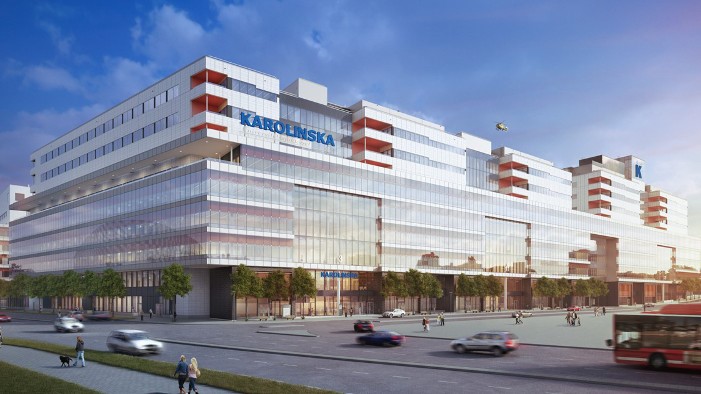
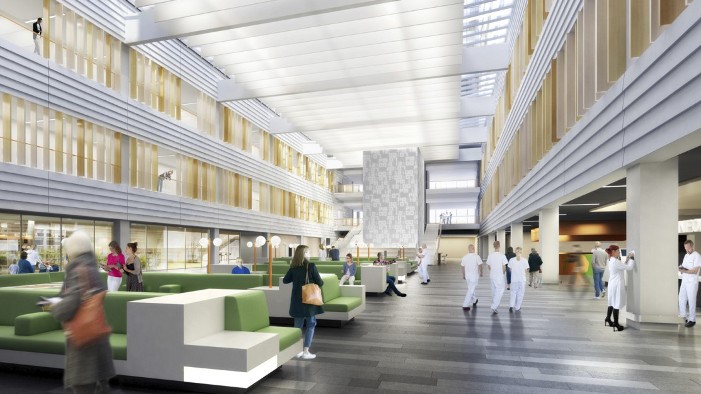
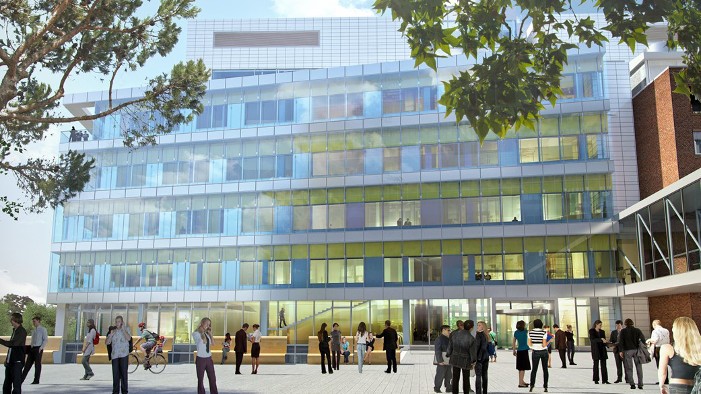
In Stockholm, Sweden, the Karolinska University Hospital are building a new more patient-centric facility and extending their in-house life sciences capabilities to enable the rapid development of tomorrow’s healthcare solutions. The project “New Karolinska Solna”, first conceived in 2001, will cost an estimated 14.5 billion SEK.
The new cutting-edge facility in Solna, which is due for completion at the end of 2018, will specialize in the treatment of patients who are seriously ill or injured, aiming to lessen demand on hospitals in surrounding counties. The 330,000 square meter complex will consist of more than 8,000 rooms, including 630 single patient rooms.
Karolinska’s operational decisions will rely heavily on real-time data analytics of individual medical outcomes combined with costs to deliver optimal treatment and cost effectiveness for the people of Stockholm and its surrounding counties.
On course to welcome its first patients in Autumn 2016 at the new facility in Solna, Karolinska University Hospital is paving the way for the future of healthcare in Europe.
Articles Archive
Subscribe to Newsletter
Center Focus
The Hospital of the Future Will Look Like This
The healthcare sector is being asked to do more with less. This fact is the crux of current discussions about how to better use information technology, and Big Data, in the hospital.
Krsnaa Diagnostics has emerged as one of the most trusted organizations for outsourcing pathology and radiology services.
Live Twitter Feed
Video
GE Leadership

Mandeep Singh Kumar
Director-Commercial
GE Healthcare India & South Asia
Copyright © 2015 GE Healthcare
“The cost of healthcare is increasing rapidly. At Karolinska, we recognised that we share a common interest with industry providers like GE. We realised that improved processes and efficiency would benefit both parties,” says Annika Thoresson, a Biotechnologist and Innovation Program Manager at the hospital’s Innovation Center. “We don’t want to just buy a device; we want to have a device and the manufacturer’s commitment to helping us improve patient care processes for years to come.”
Let the word spread:

Researcher Stefan Skare explained how GE and Karolinska have already begun to partner in this way with an issue often encountered when scanning children or patients with claustrophobia using an MRI machine.
“Many people struggle to stay still during an MR scan. But, if they move, the clinician is unable to obtain clear scans of the organs. It’s estimated that disruptive movements can cost a hospital up to $15 for every minute lost. That’s approximately $115,000 each year for every MRI scanner.”
In collaboration with GE engineers, Stefan and his team were able to prototype a seemingly simple solution. By modifying the device so a patient could be scanned with a screen above them, Stefan and his team were able to create a distraction; like cartoons, for instance. More importantly, the team also developed a technique to compensate for the patients movements.
“We tested our idea out on a paediatric patient that had difficultly remaining still in the past. Within minutes, he was absorbed in The Smurfs and his movement decreased substantially. Thanks to this relatively simple solution in combination with the advanced motion correction, the clinical image will be sharper and could potentially save us thousands of euros.”